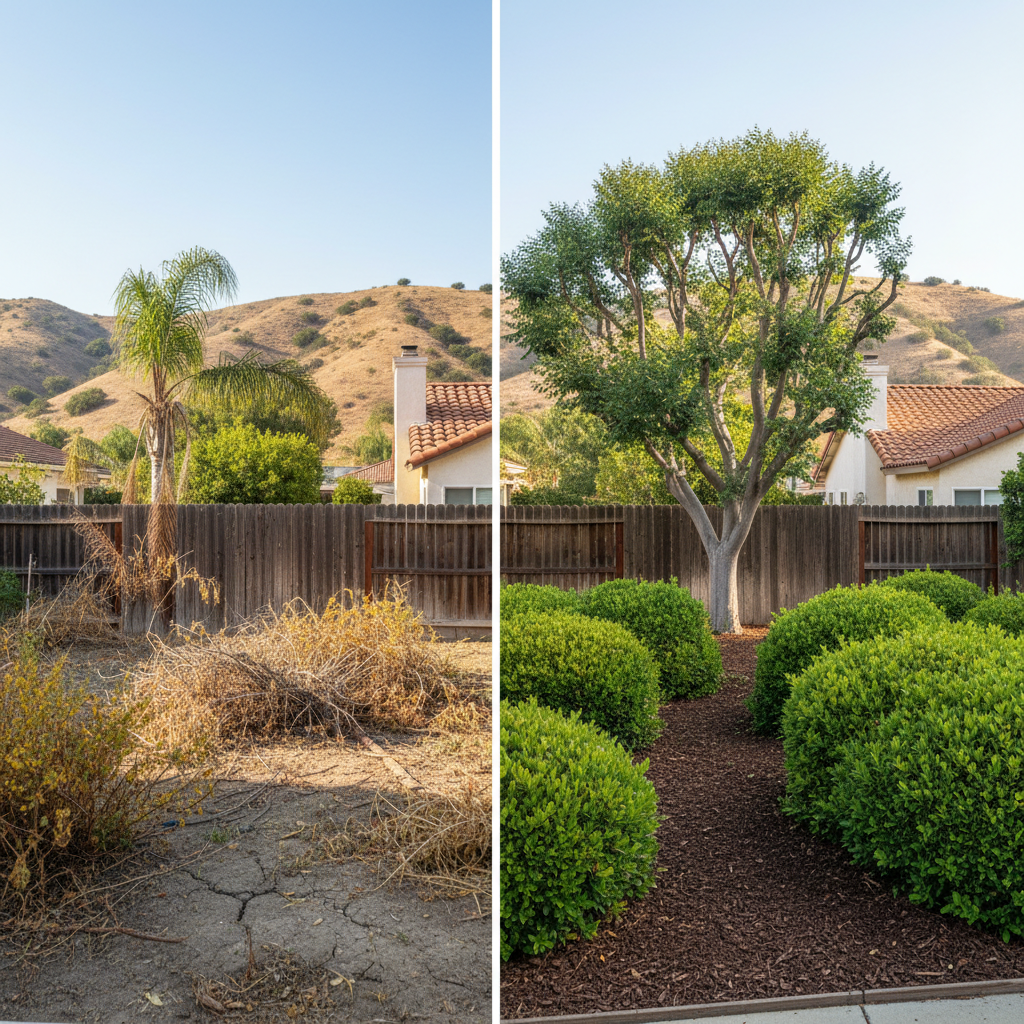
Alright, let's talk about keeping those shrubs and bushes looking sharp. I see a lot of folks around Corona, especially in those newer developments like Sycamore Creek, trying to figure out the best way to trim their landscaping. You've got two main tools for the job: hedge shears (manual or electric) and hand pruners (or loppers for thicker stuff). Both will get the job done, sure, but they do it in totally different ways. And the results? Night and day, honestly.
Hedge Shears: The Quick Cut
Hedge shears are what most people picture when they think about trimming a hedge. You just run 'em over the top and sides, and boom, everything's neat and tidy. It's fast, no doubt about it. If you've got a long row of privet or some boxwoods you want to keep in a really formal, geometric shape, these are your go-to for speed.
Cost-wise, a decent pair of manual hedge shears isn't much, maybe $30-50. Electric or gas ones will run you more, a couple hundred bucks, but they save your arms. Maintenance? Keep 'em clean and sharp, that's about it. The appearance you get is that very uniform, dense outer layer. Think of those perfectly squared-off hedges you see in old English gardens.
But here's the rub: that dense outer layer is often called 'shearing' or 'tipping,' and it's not always the best for the plant's health. What happens is you cut all the new growth at the surface. This encourages a bunch of new, small shoots right there, creating a thick shell. Sunlight can't get to the inside of the plant, so the inner leaves die off. Over time, you end up with a hollow, woody interior. It looks good from the outside for a bit, but it's not a strong plant, and it can become more susceptible to disease or pests because it's not getting proper air circulation. Not ideal, right?
Hand Pruners: The Thoughtful Trim
Now, hand pruners are a different beast entirely. With these, you're making individual cuts. You're looking at the plant, deciding which branches need to go, and cutting them back to a main stem or a healthy bud. This is often called 'selective pruning' or 'thinning.'
It takes longer, no question. You're not just whizzing over the surface. You're getting in there, looking for dead or crossing branches, or ones that are growing inwards. A good pair of bypass pruners will cost you $20-60, and they'll last forever if you treat 'em right. Loppers for thicker branches might be another $40-80.
The appearance you get is more natural, but still shaped. The plant looks fuller, healthier, and has a more open structure. This allows light and air to penetrate the entire plant, encouraging growth from the inside out. It's way better for the plant's long-term health and vigor. Plus, you get better flowering and fruiting if that's what your plant does. For something like a rose bush or a bougainvillea that thrives in our hot Corona summers, selective pruning is essential for good blooms.
Durability and Maintenance of the Plants
When you shear with hedge trimmers, you're basically forcing the plant into a shape it might not naturally want. This can stress it out. The plant has to put a lot of energy into constantly replacing those outer tips. With selective pruning, you're working with the plant's natural growth habit. You remove problem branches and encourage strong, healthy growth. This makes the plant more resilient, more durable, and generally less maintenance in the long run because it's healthier.
Think about it: a plant that's thinned out properly can handle our occasional Santa Ana winds better because it's not a solid wall catching all the force. It's also less likely to get powdery mildew or other fungal issues that thrive in dense, poorly circulated foliage.
My Recommendation for Corona Homeowners
Look, I'm not going to tell you to throw away your hedge shears entirely. If you've got a formal hedge that you absolutely need to keep perfectly square, and you understand the trade-offs, then use them sparingly for that specific purpose. But for most shrubs and bushes around your home, especially those flowering ones or anything you want to look natural and healthy, you need to be using hand pruners.
It's a bit more work up front, but it pays off big time in the health, beauty, and longevity of your plants. You'll have fewer issues, better blooms, and a landscape that looks vibrant, not just 'cut.' At All Things Tree, we always lean towards methods that promote plant health first, because a healthy plant is a beautiful plant. So, grab those pruners, take your time, and give your plants the thoughtful trim they deserve.